Monday, January 14, 2013

Powell at the Polls

Roger Hudson expands on a photograph of Enoch Powell campaigning in his Wolverhampton seat in 1970.


The photographer must have thought Christmas had come early when he got this shot of Enoch Powell campaigning for re-election in Wolverhampton in 1970. He appears to ignore the two black boys, possibly twins, and it is left to his wife, Pamela, to hand one a leaflet. There is an additional quirkiness in the hat and overcoat he wears on what is obviously a warm day, judging by the children’s short sleeves and Pamela’s sleeveless dress. The hat may be his trademark but under the circumstances his identity is hardly in doubt. In fact this photographer was not the only lucky one; another managed to position a white boy blowing a balloon of bubblegum in front of Powell in his Land Rover.

Powell had demonised himself two years before with a speech at Birmingham, breaking the taboo against discussion of immigration and what he saw as its consequences: ‘Like the Romans, I seem to see the River Tiber foaming with much blood.’ Britain was ‘mad, literally mad as a nation’ to allow 50,000 dependents of immigrants to enter the country each year. That he, a professor of Greek at the age of 25, was quoting Virgil did not stop Heath from sacking him from his shadow cabinet the next day. Marches by dockers and Smithfield meat-porters protesting at his victimisation and a poll showing that 74 per cent of the population agreed with him could not get him back into the fold. He was firm in the years to come that he never talked about race, that his speeches were about immigration and even Labour leader Michael Foot acknowledged that. Unlike most Conservative MPs his urban constituency meant he knew the impact concentrations of immigrants could have on housing, education and crime. If his record was examined it would be found that he had learnt Urdu and studied India’s literature while serving there during the war and that in 1959 he had made one of the century’s great speeches in the Commons, condemning the Hola Camp killings during the Mau Mau emergency in Kenya. But his language in 1968 was far too intemperate and his story of the little old lady, the last remaining white person in her street, having excreta put through her letter box, he seemed not to have heard at first hand and not to have checked. Perhaps the most damaging consequence was that any debate on immigration for the next 40 years was dead before it began.

Beyond the Border

The right to determine who enters its territory has always been seen as a test of a state’s sovereignty, but the physical boundaries have often been vague, says Matt Carr.


In the early 21st century it is possible to detect a contradictory dynamic in global politics. On the one hand we inhabit an increasingly integrated and ‘borderless’ world in which national barriers against the movement of commodities and capital have been progressively dismantled. On the other hand governments across the world have gone to extraordinary lengths to reinforce their frontiers with physical barriers, new technologies and personnel in order to restrict the movement of unwanted people.
These efforts are largely directed at the prevention of ‘illegal’ immigration. Today politicians from some of the richest countries on earth talk of ‘defending’ or ‘protecting’ their borders against a putative ‘invasion’ of migrant workers and refugees, who are depicted as a threat to their lifestyles, jobs or cultural identity. From a peripheral concern during the Cold War, border enforcement has once again become a symbolic marker of national identity and an essential instrument in enforcing the distinctions between ‘legal’ and ‘illegal’ travel.
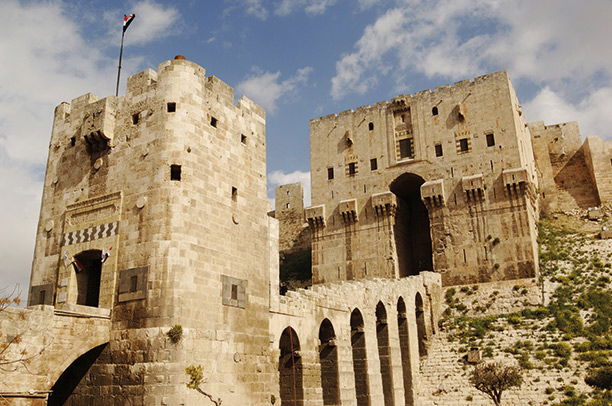
States and rulers have always regarded the ability to determine who enters or remains in their territories as a key test of their sovereignty, but it was not until relatively recently that the border became the place where right of entry could be granted or refused, depending on the documentation provided. In medieval Europe the boundaries between rival countries and centres of power were largely symbolic or consisted of amorphous borderlands, ‘marches’ and ‘debatable lands’ of indeterminate or contested status. In terms of their practical implications, the real ‘borders’ consisted of the fortified walls that surrounded towns and cities, where the authorities could exclude undesirable or incompatible people at the gates, from vagrants, beggars and the ‘wandering poor’, to ‘masterless women’, lepers, Gypsies or Jews.
With the absorption of city states, towns, dukedoms and principalities into larger entities and the gradual displacement of local tariff and customs barriers, states increasingly sought the same powers of exclusion. In 1604 the Dutch geographer Mattheus Quadt published an atlas delineating the borders between European states for the first time. But in early modern Europe migrants were still more likely to be monitored at the district or parish level rather than at the border itself.
In 1561 the English Privy Council of Elizabeth I ordered the local authorities across London ‘to searche out & learne the holl number of Alyens & Strangers’ in the city in order to identify potential religious dissidents and troublemakers.’ In the early 17th century the Spanish royal secretary Fernández de Navarette lamented the fact that: ‘All the scum of Europe have come to Spain, so that there is hardly a deaf, dumb, lame or blind man in France, Germany, Italy or Flanders, who has not been to Castile.’
Such complaints were a testament to the porosity of state borders. Until the late 18th century travellers were more likely to be monitored at the district or parish level. During the French revolutionary wars the Jacobins began to issue foreign travellers with a carte de sureté on arrival at the French border, but these early ‘passports’ were dependent on the ideological affiliations of the holder rather than their nationality and subsequently fell into disuse after the Napoleonic Wars.
For much of the 19th century border control was sporadic and often non-existent, as millions of people migrated from Europe to the New World or within Europe itself without any passports or documentation. In 1942 the Austrian writer Stefan Zweig recalled the amazement of young people when he told them he had travelled across the world without a passport before the First World War.
The situation had started to change following the global economic slump in 1873, when governments began to introduce immigration controls based on nationality and ethnicity for the first time. In 1882 the US government passed the first Chinese Exclusion Act in response to racist ‘Yellow Peril’ lobbying from California politicians. In 1885 Bismarck ordered the expulsion of 40,000 Polish workers from Germany to prevent the ‘Polonization’ of Prussia. In 1897 the South African colony of Natal introduced a language test for immigrants, which barred entry to anyone who could not fill out an application form in English – a test that was specifically intended to eliminate ‘coolie’ labour from India. The ‘Natal formula’ was also introduced in Australia in order to keep out Chinese migrant workers. 

Sovereignty: A Painful State


There is a reason why some writers impatient with the idea of sovereignty have taken to calling it the mal de Bodin. The 16th-century French lawyer, who witnessed the flaring up of confessional conflicts and the start of the rapacious expansion of the European powers into other continents, was indeed the first to put into wide circulation the notion of an ‘absolute and perpetual power’. But Jean Bodin was not as great an innovator as he is sometimes made out to be. There already existed a thick web of medieval jurisprudence at the time when he wrote.
Starting from the late 11th century, lawyers had found ways to make themselves helpful to rulers by taking an occasional page out of Roman and canon law – and an occasional passage conveniently out of context – to buttress the authority of potentates no longer willing to subject themselves to the double sword of imperial and papal power. Their ingenious counter-move (which goes a long way towards explaining the paradoxes that bedevil the modern concept of sovereignty) was to make every king into an emperor,imperator in regno suo, with powers resembling divine omnipotence. The result was that ever since lawyers have found themselves struggling with secular versions of old theological quandaries. The question as to whether the British Parliament can make some of its acts trigger a mandatory referendum – a hot topic at the moment – is not very different from asking whether God can create a stone so heavy that even he cannot lift it.

Hitler's British Lair

The news that Adolf Hitler might have established his headquarters at Bridgnorth in rural Shropshire, in the event of a successful Nazi invasion, would have struck many perhaps as an unlikely tale. Why Shropshire? Why Bridgnorth? As the BBC told us, it was all about transport links, about the region’s centrality and, rather implausibly, because of its similarity to the Black Forest. 
Well, the decisive factor has not been mentioned – that of isolation. Hitler was not what we would call a ‘people person’, and in wartime he was happy to devote himself entirely to the prosecution of the war, eschewing almost all public appearances and doing a rather good impression of a fascist hermit. Consequently, it was Goebbels who became in large degree the public face of the regime, touring the bomb sites and dispensing sympathy and slogans to the bombed out.
Hitler, meanwhile, spent most of his time at his ‘Wolf’s Lair’ headquarters in rural East Prussia, tucked away in the forest, away from the hustle of the capital, in a region that was both comparatively remote yet only a day’s train ride from the epicentre of power – a place, in fact, rather like Bridgnorth. 
Hitler’s penchant for isolation was to have some serious consequences. At the ‘Wolf’s Lair’, his generals complained, he was cut off from the tribulations of the German people, blind to the consequences of the Allied bombing, remote from the ubiquitous death notices. In fact, at the ‘Wolf’s Lair’ he was free to conduct his war almost as a wargame, with his armies like so many counters strewn across a map table. 
Hitler’s isolation in East Prussia both spurred the German resistance and provided them with their greatest opportunity. So, whilst Stauffenberg would rail against the literal and metaphorical image of “Hitler in the bunker”, he would also attempt to exploit the resulting remoteness for all it was worth; seeking to cut the ‘Wolf’s Lair’ off from the rest of Germany in July 1944, whilst he and his confederates launched a coup in Berlin.  Far from a footnote in history, then, the ‘Wolf’s Lair’ is of rather seminal importance. 
So, the prospect of Hitler coming to Bridgnorth is indeed an intriguing one, but one that nonetheless makes good sense when viewed in the context of Hitler’s wartime habits and preferences. One thing is for certain, if the German Führer ever had managed to come to Shropshire, it is doubtful that he would have spent long in any manor house or country pile. Given his passion for reinforced concrete, he would have swiftly built himself a bunker.  “Hitler in the bunker” said Stauffenberg, “that’s the real Hitler”.  He was right.

The cover story for our January issue, 'Hitler's Turncoat Tutor', concerns the life of Karl Mayr, the army officer often described as the Nazi leader's political midwife: as a propagandist in the Bavarian Reichswehr group command, Mayr was instrumental in introducing Hitler to the power of politics.
Mayr first rose to prominence with his role in the Kapp Putsch of 1920, in which an attempt was made to overthrow the nascent Weimar Republic. The video above shows British Pathe footage from the Putsch (it's best if you ignore the music and over-enthusiastic title cards).
You can read about Karl Mayr in the January issue of History Today, which is out this week. The new issue is available right now for iPad, Kindle Fire and Android Tablet owners; simply download the app and follow the instructions.


The Longman - History Today Book Prize:


The winner was Bill Schwarz, for Memories of Empire. Vol. I The White Man’s World(Oxford University Press).
Highly Commended: Glyn ParryThe Arch Conjuror of England: John Dee (Yale University Press) and Andrew PrestonSword of the Spirit, Shield of Faith: Religion in American War and Diplomacy (Knopf).

The Longman - History Today Picture Research Prize:

The winner was Pauline Hubner for The Great Builders, edited by Kenneth Powell (Thames & Hudson)
Highly Commended: Louise Thomas for Gay Life Stories by Robert Aldrich (Thames & Hudson) and Roger Moorhouse for Vanished Kingdoms by Norman Davies (Allen Lane).

The Undergraduate Dissertation Prize, in association with the Royal Historical Society:

The winner was Frederick Smith, for Discerning Cheese from Chalke: Louvainist Propaganda and Recusant Identity in 1560s England

The Longman - History Today Trustees' Award:

Pevsner Architectural Guides, published by Yale University Press, accepted by the publisher, Sally Salvesen.

Saturday, December 29, 2012

Sudan Famine UN food camp [1994]


first at all i want to say than I just think this is a horrible photo. Although not so much the photo itself, more the fact that this happens in the world and the majority of us ‘just can’t be bothered to do anything’. This really is an impacting image. The fact that vulture is waiting for the child to die is just sad.


The photo is the “Pulitzer Prize” winning photo taken in 1994 during the Sudan Famine.
The picture depicts stricken child crawling towards an United Nations food camp, located a kilometer away.
The vulture is waiting for the child to die so that it can eat him. This picture shocked the whole world. No one knows what happened to the child, including the photographer Kevin Carter who
left the place as soon as the photograph was taken.
Three months later he committed suicide due to depression.