In the early 21st century it is possible to detect a contradictory dynamic in global politics. On the one hand we inhabit an increasingly integrated and ‘borderless’ world in which national barriers against the movement of commodities and capital have been progressively dismantled. On the other hand governments across the world have gone to extraordinary lengths to reinforce their frontiers with physical barriers, new technologies and personnel in order to restrict the movement of unwanted people.
These efforts are largely directed at the prevention of ‘illegal’ immigration. Today politicians from some of the richest countries on earth talk of ‘defending’ or ‘protecting’ their borders against a putative ‘invasion’ of migrant workers and refugees, who are depicted as a threat to their lifestyles, jobs or cultural identity. From a peripheral concern during the Cold War, border enforcement has once again become a symbolic marker of national identity and an essential instrument in enforcing the distinctions between ‘legal’ and ‘illegal’ travel.
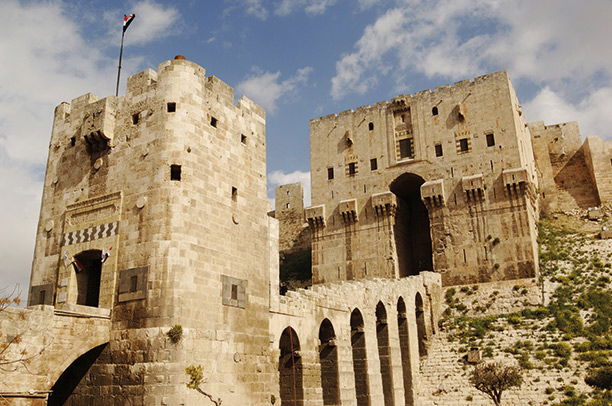
States and rulers have always regarded the ability to determine who enters or remains in their territories as a key test of their sovereignty, but it was not until relatively recently that the border became the place where right of entry could be granted or refused, depending on the documentation provided. In medieval Europe the boundaries between rival countries and centres of power were largely symbolic or consisted of amorphous borderlands, ‘marches’ and ‘debatable lands’ of indeterminate or contested status. In terms of their practical implications, the real ‘borders’ consisted of the fortified walls that surrounded towns and cities, where the authorities could exclude undesirable or incompatible people at the gates, from vagrants, beggars and the ‘wandering poor’, to ‘masterless women’, lepers, Gypsies or Jews.
With the absorption of city states, towns, dukedoms and principalities into larger entities and the gradual displacement of local tariff and customs barriers, states increasingly sought the same powers of exclusion. In 1604 the Dutch geographer Mattheus Quadt published an atlas delineating the borders between European states for the first time. But in early modern Europe migrants were still more likely to be monitored at the district or parish level rather than at the border itself.
In 1561 the English Privy Council of Elizabeth I ordered the local authorities across London ‘to searche out & learne the holl number of Alyens & Strangers’ in the city in order to identify potential religious dissidents and troublemakers.’ In the early 17th century the Spanish royal secretary Fernández de Navarette lamented the fact that: ‘All the scum of Europe have come to Spain, so that there is hardly a deaf, dumb, lame or blind man in France, Germany, Italy or Flanders, who has not been to Castile.’
Such complaints were a testament to the porosity of state borders. Until the late 18th century travellers were more likely to be monitored at the district or parish level. During the French revolutionary wars the Jacobins began to issue foreign travellers with a carte de sureté on arrival at the French border, but these early ‘passports’ were dependent on the ideological affiliations of the holder rather than their nationality and subsequently fell into disuse after the Napoleonic Wars.
For much of the 19th century border control was sporadic and often non-existent, as millions of people migrated from Europe to the New World or within Europe itself without any passports or documentation. In 1942 the Austrian writer Stefan Zweig recalled the amazement of young people when he told them he had travelled across the world without a passport before the First World War.
The situation had started to change following the global economic slump in 1873, when governments began to introduce immigration controls based on nationality and ethnicity for the first time. In 1882 the US government passed the first Chinese Exclusion Act in response to racist ‘Yellow Peril’ lobbying from California politicians. In 1885 Bismarck ordered the expulsion of 40,000 Polish workers from Germany to prevent the ‘Polonization’ of Prussia. In 1897 the South African colony of Natal introduced a language test for immigrants, which barred entry to anyone who could not fill out an application form in English – a test that was specifically intended to eliminate ‘coolie’ labour from India. The ‘Natal formula’ was also introduced in Australia in order to keep out Chinese migrant workers.

No comments:
Post a Comment